Annotated Sketchbook Page

StyleRef·@styleref·
Extract your style to start building your Style Board.

Description

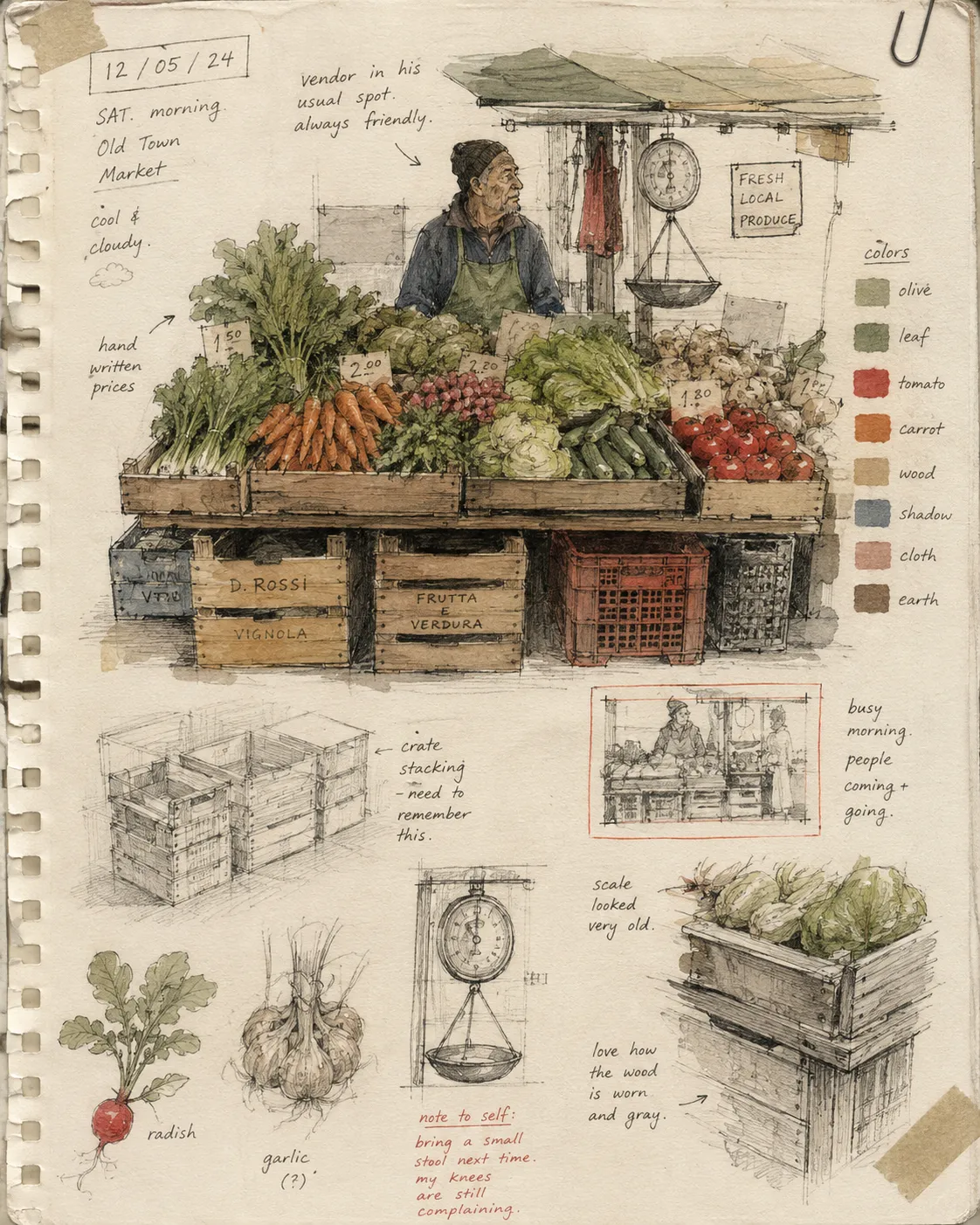
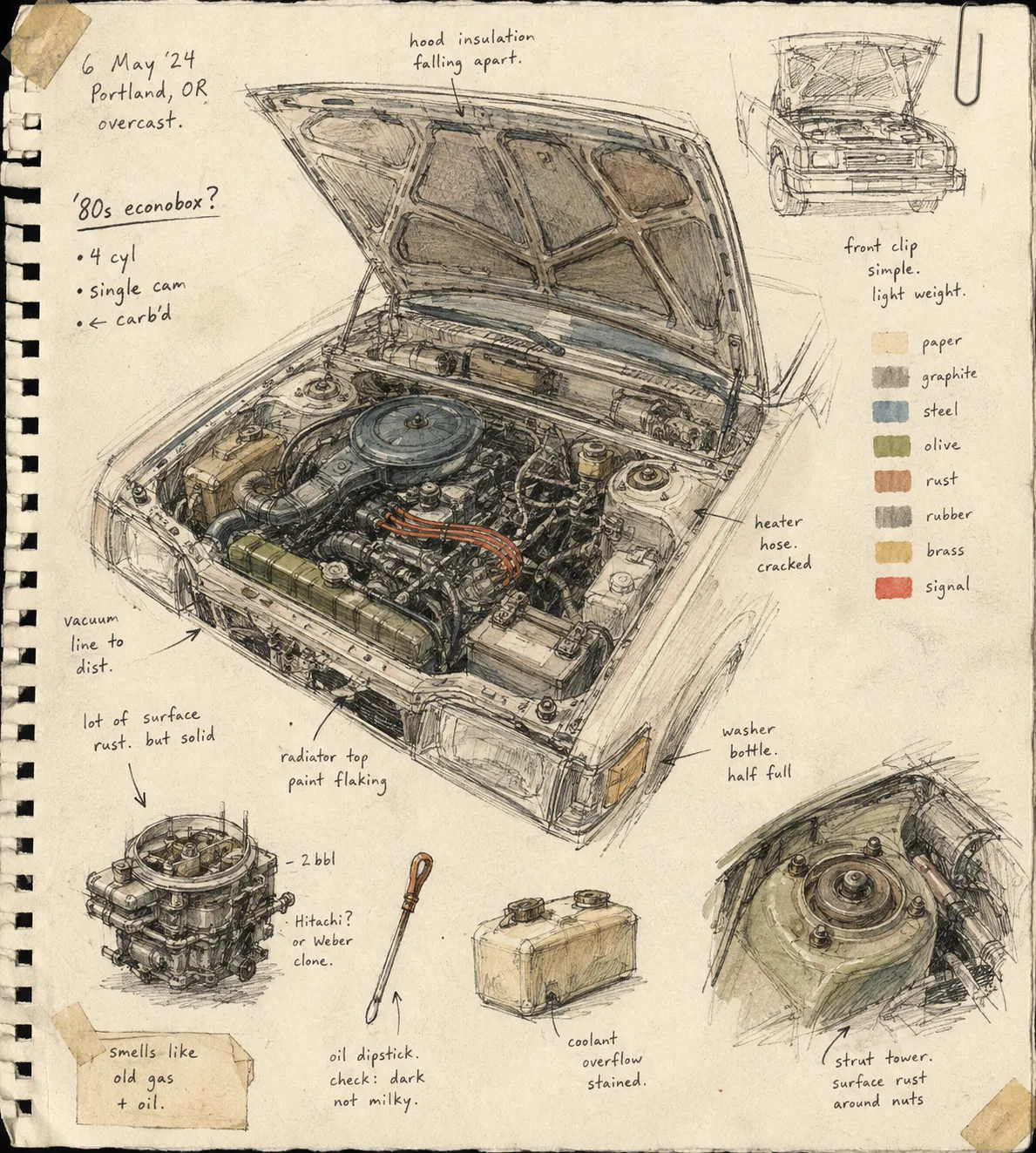
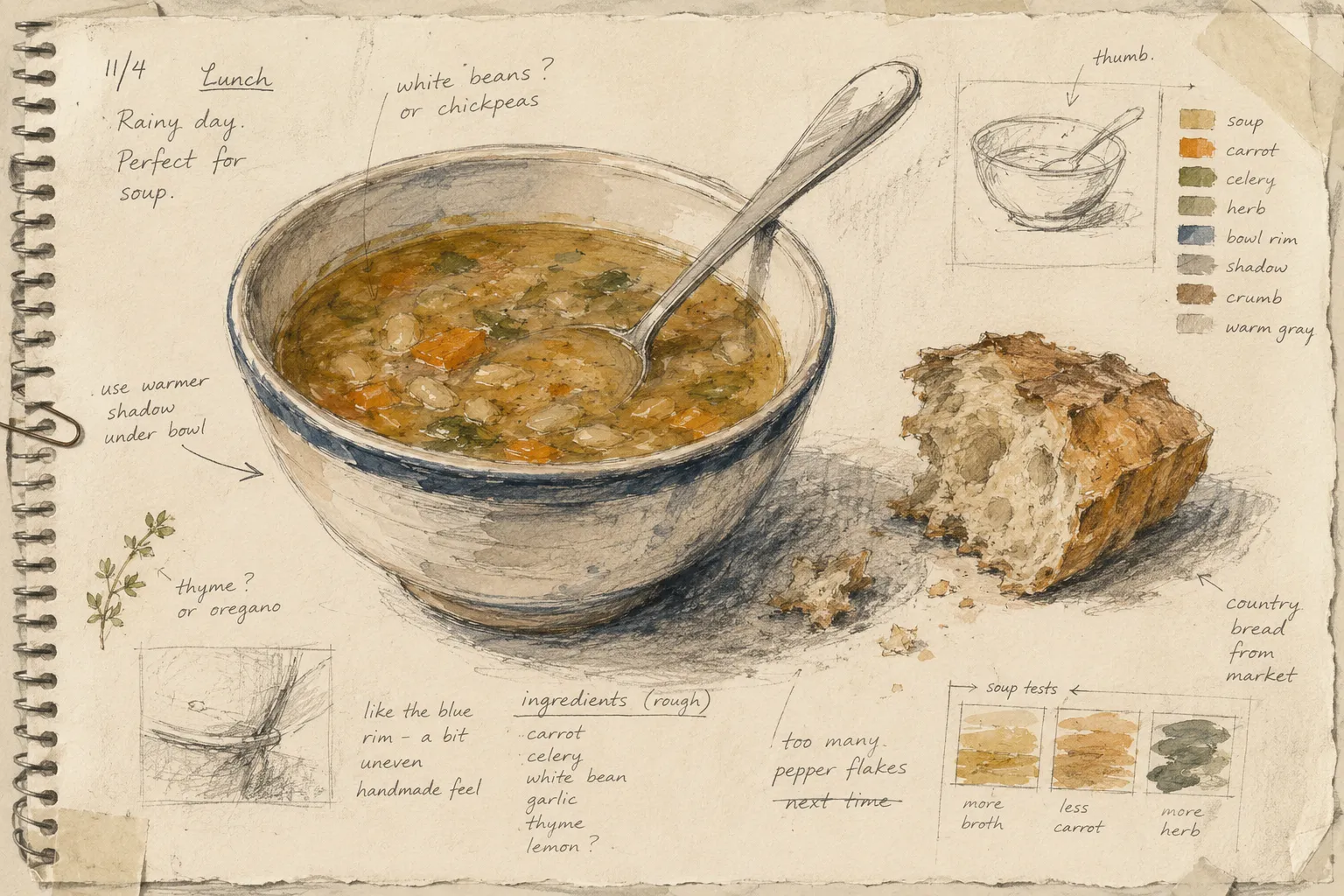
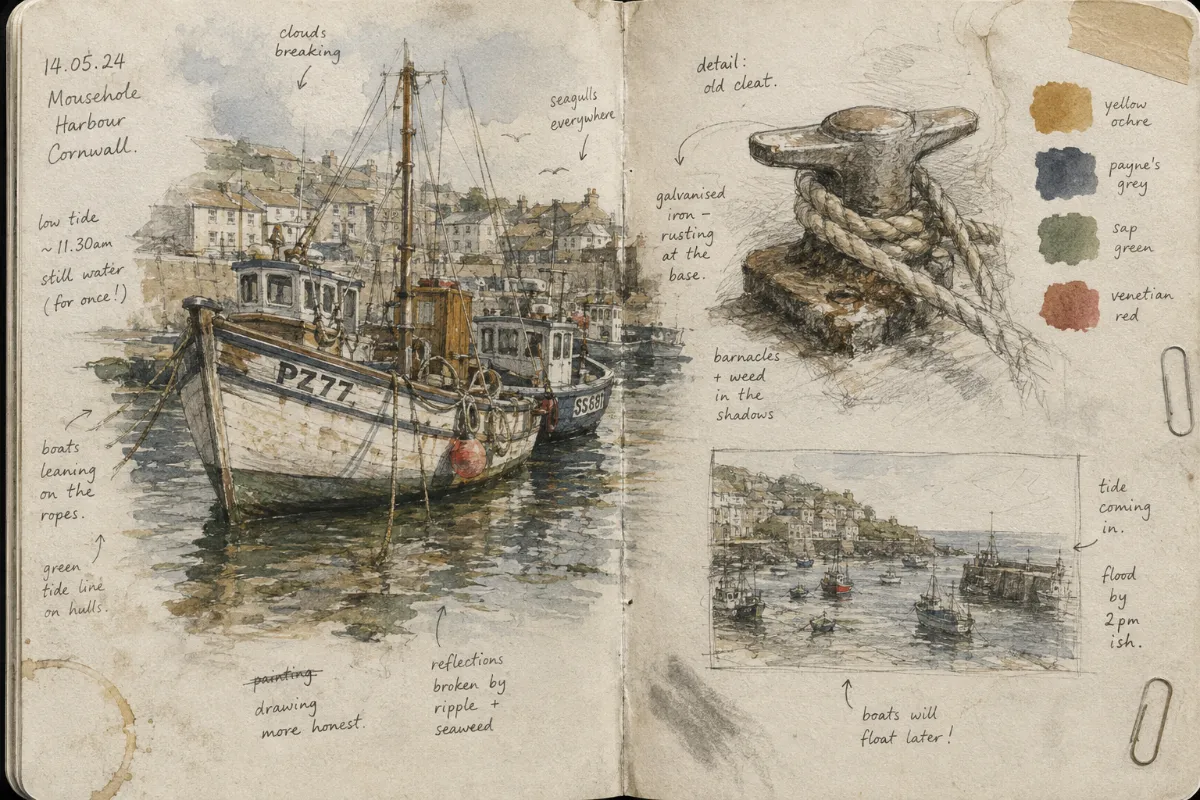
The working page presented as the finished piece: loose pencil under-drawing, handwritten notes in the margins, splashed colour, and the mess of an artist thinking. Suits editorial features, travel and food content, and brands that want to show process.

Colors

#F4F0E645%Usage: Paper
#55524E20%Usage: Graphite linework
#B58A3C10%Usage: Wash areas
#B77A7B8%Usage: Wash areas
#71845A7%Usage: Wash areas
#53616B5%Usage: Wash areas
#76533C3%Usage: Wash areas
#C83F352%Usage: Focal accents
Palette Size
6–8 colors
Color Temperature
Warm
Saturation Range
Subdued
Contrast Strategy
Value contrast
Color Dominance
Background-dominant
Gradient Policy
No gradients

Output Format

Creative Discipline
Illustration
Medium
Mixed
Delivery Mode
Still
Canvas Behavior
sketchbook paper
Cropping Priority
Free

Shape Language

Negative Space Usage
Unmarked paper remains between incomplete studies and notes
Shape Basis
Hybrid
Primitive Dominance
Freeform curves
Edge Sharpness
Studies dissolve into bare paper; wash edges alternate between soft blooms and hard dry lines
Silhouette Clarity
Recognizable

References

Cultural References
Illustrated journal, field notebook, observational drawing
Temporal Reference
Timeless

Guardrails

Common Artifacts to Avoid
AI Gloss / Plastic Smoothing, Studio Post-processing, Stylistic filters, AI symmetry artifacts
Avoided Visuals
clean single illustration; decorative script; even complete rendering; flat simulated paper overlay; neat margins; centred layout; tidy handwriting
Allowed Visuals
multiple unfinished studies; visible revisions; marginal annotations; arrows; color swatches; exposed paper tooth; eraser ghosts; smudges; tape corners; paperclip marks;

Typography

Aa, Bb, Typography
Font FamilyHandwritten
Letter SpacingIrregular handwritten spacing
Text Case
Mixed
Text Presence
Required
Text Visual Role
Secondary visual element
Text Integration
Overlaid
Hierarchy
Annotations vary in scale, angle, and density; notes wrap around studies and shrink to fit gaps

Inspiration Images

Light & Shadow

Lighting Mood Style
Naturalistic
Key Light Style
Soft
Light Source Type
Natural
Shadow Type
Partial hatching and wash model only one side of forms; remaining areas stay open
Lighting Presence
Flat, evenly lit page with lightly implied light inside individual studies

Surface, Material & Detail

Material Simulation
Paper
Surface Treatment
Material-simulated
Surface Texture Style
Cold-press or cartridge-paper tooth; grain-catching graphite, watercolor blooms, hard drying edges, smudges, and eraser ghosts
Texture Usage
Photographic
Imperfection Level
Used
Age of Surface
Aged
Abstraction Level
Semi-representational
Micro-detail Allowance
Allowed
Pattern / Motif Usage
None

Background & Environment

Background Type
Texture
Environment Mood
Abstract
Background–Subject Relationship
Integrated
Background Complexity
Moderate
Prop / Set Styling
Found / Raw

Mood & Personality

Mood & Personality
Casual intimacy, Raw, Everyday authenticity, Documentary realism
Energy Level
Active
Tone Register
Observational
Representation Mode
Literal
Real-world Accuracy
Loosely accurate
Narrative Allowance
Full scene

Spatial Structure & Hierarchy

Focal Structure
Primary + secondary
Hierarchy Clarity
Moderate
Symmetry
Asymmetrical balance
Balance Type
Tension-based
Layout Axis
Gridless
Grid System
None
Visual Density
Busy
Plane Separation Method
Overlap, Scale

Line & Stroke System

Stroke Usage
Structural outlines
Stroke Weight
Variable
Stroke Consistency
Loose graphite under-drawing with broken, grain-caught lines, revisions, and dragged-hand smudges
Stroke Color
Neutral

Artistic Mediums & Techniques

Physical Medium
Graphite pencil with thin watercolor or gouache wash on cold-press or cartridge paper
Illustrative Technique
Cross-hatching

Custom Style Items

Working-Page Logic
Treat the page as evidence of making: main study, detail study, thumbnail, notes, and tests coexist without a formal grid.
Revision Visibility
Leave first attempts visible beside redraws; retain crossed-out words, construction lines, and exploratory marks.
Wash Economy
Apply thin, incomplete washes selectively; let color fade into bare paper rather than fully rendering forms.
Marginal Annotation
Use quick angled notes, dates, place names, color labels, and arrows pointing directly into drawn details.
Physical Page Evidence
Show deckled or spiral-torn paper edges, tape at corners, paperclip impression, and hand-drag smudges.
© 2026 StyleRef. All rights reserved.